


Blog Summary Gum pockets are a common sign of periodontal disease that can develop when plaque and bacteria build up below the gumline. Learn how to recognize the symptoms of gum disease, what causes periodontal pockets, and how professional treatment and good oral hygiene can help protect your gums and teeth.
Your oral health is a vital part of your overall well-being, and we want to empower you to keep your smile bright and healthy. Did you know that gum disease affects 47.2% of Americans over 30?[1] Let's talk about a key sign of this common issue that you may have heard about: gum pockets.
When your gums pull away from your teeth, they can form small spaces. These are known as gum pockets, and they can become a place for plaque and bacteria to gather. Understanding what causes them is the first exciting step toward taking charge of your dental health. We're here to guide you through what you need to know about gum disease and how you can keep your gums in great shape.
What Is Gum Disease and Periodontal Disease?

To get a clear picture of gum pockets, it's helpful to start with gum disease itself. Your daily oral hygiene habits are your go-to tools in preventing harmful bacteria from causing issues.
Gum disease begins when plaque, a sticky film, builds up on your teeth. If this plaque isn't cleared away with daily brushing and flossing, it can harden into tartar. Once tartar forms, it requires a professional cleaning to remove. Gum disease typically progresses through two main stages: gingivitis and periodontal disease.
Gingivitis: Think of this as the early warning stage. It's a mild and reversible form of gum disease. You might notice your gums look a little puffy or red, and they may bleed when you brush. The great news is that at this stage, no permanent damage has occurred to the bone or tissues that hold your teeth in place.
Periodontal Disease (Periodontitis): This is the more advanced stage. It shares symptoms with gingivitis, like swollen gums, but it's more serious. The gums begin to pull away from the teeth, creating those gum pockets we mentioned. As periodontal disease progresses, the gums can recede, making teeth look longer and exposing the tooth root.
As the bacteria continue to wreak havoc on your gums, the bones and ligaments that hold your teeth in place will begin to loosen, and the bone will begin to dissolve. If left untreated, teeth will eventually fall out.
What Causes Gum Pockets?
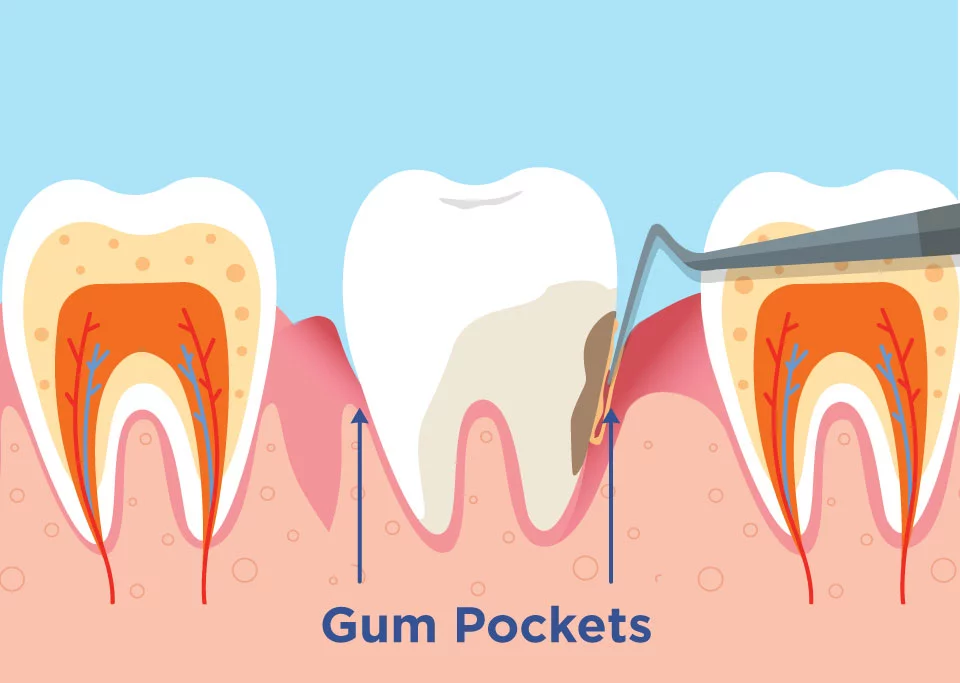
So, how do these pockets form? Gum pockets, or periodontal pockets, develop when plaque works its way below the gumline. As plaque and bacteria gather around the tooth's root, this space, or gap, begins to expand.
As these gaps deepen, they create protected spaces where bacteria can thrive and your toothbrush can't easily reach. The roots do not have the same slick surface as the tooth's enamel, so plaque and food easily stick to them. Protected by the hard calculus and gum pockets, bacteria slowly erode the gum tissue, ligaments, and jawbone that hold the teeth in place.
While it has long been assumed that the loss of bone and teeth is directly caused by bacteria, some research suggests that chronic inflammation in the gums triggers an immune response of chemicals that is meant to kill the bacteria but also destroys gum tissue and bone. [2]
Regardless of whether the bacteria or the immune response cause the loss of material, regular dental hygiene that removes plaque and bacteria from the mouth reduces inflammation that leads to periodontal disease.
How to Know If You Have Gum Disease: Key Symptoms
Knowing what to look for is crucial in your health journey. A dental professional can measure the depth of your gum pockets with a tiny ruler called a periodontal probe.[3]
Healthy gums have a snug fit around each tooth, with a space of only 1 to 3 millimeters. If the pocket depth is greater than 3 mm, it's a signal of gum disease.[4]
You can also be on the lookout for key signs at home. Watch for gums that are:
• Puffy or swollen
• Red or purple
• Easily bleed
• Gum recession
Other symptoms can also point to gum disease. Pay attention to:
• Pain when chewing
• Bad breath
• Bad taste in the mouth
• Any change in how teeth fit together when closed
• Sensitive or loose teeth
If you are experiencing any of these symptoms, make an appointment with your dentist to address the cause. The sooner you address gum disease, the better the outcome.
Gum Disease Treatment: How to Get Rid of Gum Pockets
Gum pockets can heal with proper care. By embracing great oral hygiene habits and partnering with your dentist on a treatment plan, you can help reduce pocket depth and promote healing for your gums and teeth. It’s all about taking proactive steps.
The foundation of healing is removing the plaque that causes the problem in the first place. That means brushing twice a day, flossing regularly, and keeping up with your professional dental cleanings. Your dentist may even suggest more frequent visits to give your gums the dedicated care they need.
If you already have pockets that are too deep to clean at home, your dental team has some great non-surgical options. A deep cleaning procedure known as scaling and root planing can make a huge difference.
Scaling is the process of carefully removing plaque and tartar from below the gumline.
Root planing involves smoothing the root surfaces to help your gums reattach to your teeth.
For more advanced cases, your dentist might discuss options like pocket reduction surgery or grafting procedures to restore tissue that has been lost.
Your smile's future is bright. Managing gum disease is a collaborative effort between you and your dental professionals. With consistent at-home care and professional guidance, you can effectively manage this condition and
Find your trusted, local dentist today!
Smile Generation blog articles are reviewed by a licensed dental professional before publishing. However, we present this information for educational purposes only with the intent to promote readers’ understanding of oral health and oral healthcare treatment options and technology. We do not intend for our blog content to substitute for professional dental care and clinical advice, diagnosis, or treatment planning provided by a licensed dental professional. Smile Generation always recommends seeking the advice of a dentist, physician, or other licensed healthcare professional for a dental or medical condition or treatment.
Frequently Asked Questions About Gum Pockets
Yes, gum pockets can heal or shrink when treated early. Good oral hygiene and professional dental care can reduce shallow pockets and restore gum health, while deeper pockets may improve with treatment but not always return fully to normal. Consistent brushing, flossing, and dental visits help keep pockets healthy and prevent them from worsening.
Gum pockets can be cleaned professionally by your dentist using a special water spray called pocket irrigation after deep cleaning. At home, you can rinse your mouth by swishing warm salt water or an alcohol-free mouthwash to help remove bacteria and debris from the pockets. You can also use a water flosser designed to gently flush inside the pockets to keep them clean and healthy.
Knowing what gum disease is and how it is caused is the best way to know how to treat gum disease.
Unfortunately, once the infection gets to a moderate or severe stage, there is no cure for periodontal disease. But through treatment and diligent oral hygiene, it can be managed.
Gum disease does not directly cause death, but it raises your risk for serious, life-threatening conditions elsewhere in the body. People with gum disease are two to three times more likely to have a major cardiovascular event, heart attack, or stroke.[5] This is because the inflammation and bacteria from gum disease can enter the bloodstream and affect your heart and blood vessels, showing just how strongly mouth health and whole-body health are connected.
[1] Scaling and Root Planing, ADA, Nov. 5, 2025, https://www.mouthhealthy.org/all-topics-a-z/scaling-and-root-planing
[2] Researchers Identify Immune Culprits Linked to Inflammation and Bone Loss in Gum Disease, Oct. 17, 2018, https://www.nih.gov/news-events/news-releases/researchers-identify-immune-culprits-linked-inflammation-bone-loss-gum-disease
[3] Listgarten, M.A., Periodontal probing: what does it mean? PubMed, June 1980, https://pubmed.ncbi.nlm.nih.gov/7000852/
[4] Periodontal (Gum) Disease, NIH, Nov. 2024, https://www.nidcr.nih.gov/health-info/gum-disease
[5} The Heart of the Matter, CareQuest, June 6, 2024, https://www.carequest.org/resource-library/heart-matter