

Blog Summary: Checking blood pressure at the dentist can help detect hypertension early, a condition affecting nearly half of U.S. adults. Often symptomless, high blood pressure raises the risk of heart attack and stroke. Dental screenings support whole-body health and highlight the important connection between oral health and cardiovascular wellness.
Checking your blood pressure during a dental visit might seem routine, but it’s more important than you might think. In fact, it’s truly a valuable and vital sign.
That’s because high blood pressure, also known as hypertension, affects nearly half of U.S. adults and is a leading contributor to heart attack and stroke, according to the American Heart Association (AHA).1,2 Detecting this condition early, whether at your doctor’s office or dentist’s, allows for timely intervention to manage high blood pressure before it becomes life-threatening.
Hypertension happens when blood flows through your arteries at higher pressure than normal. Many people with hypertension don’t realize they have it because there are often no symptoms – until it becomes a medical crisis.3
Two Numbers That Say A Lot About Your Health
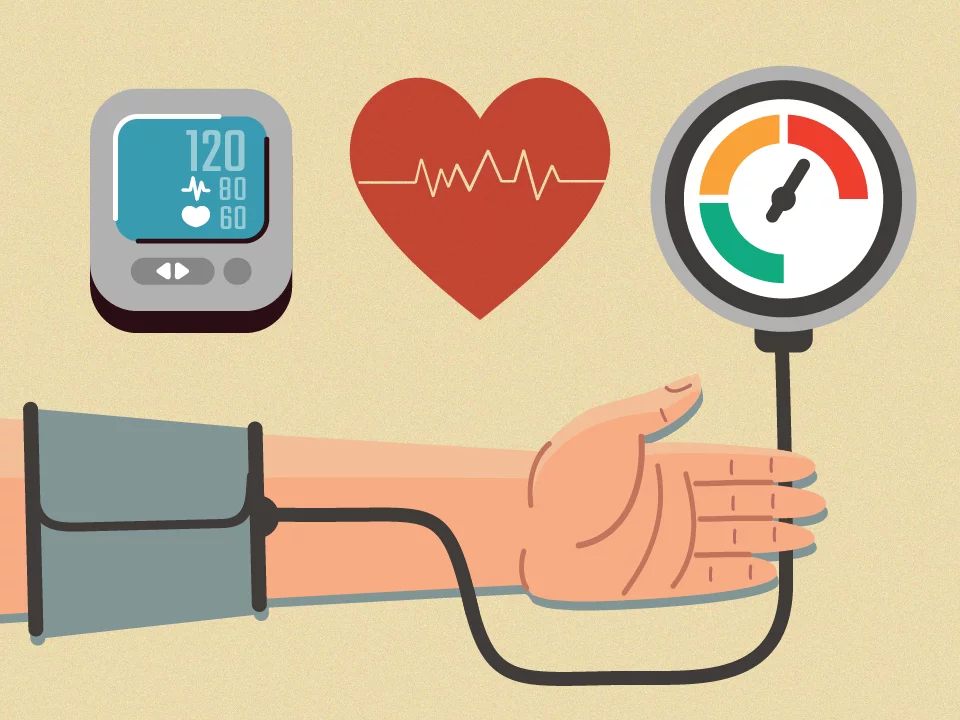
A blood pressure reading has two numbers. The top number, systolic pressure, measures the force as your heart pumps blood out. The bottom number, diastolic pressure, measures the resistance when your heart refills with blood between heartbeats. A normal reading is below 120/80. If your numbers are consistently higher, it may indicate hypertension. The higher the numbers, the more dangerous it is to your health.1
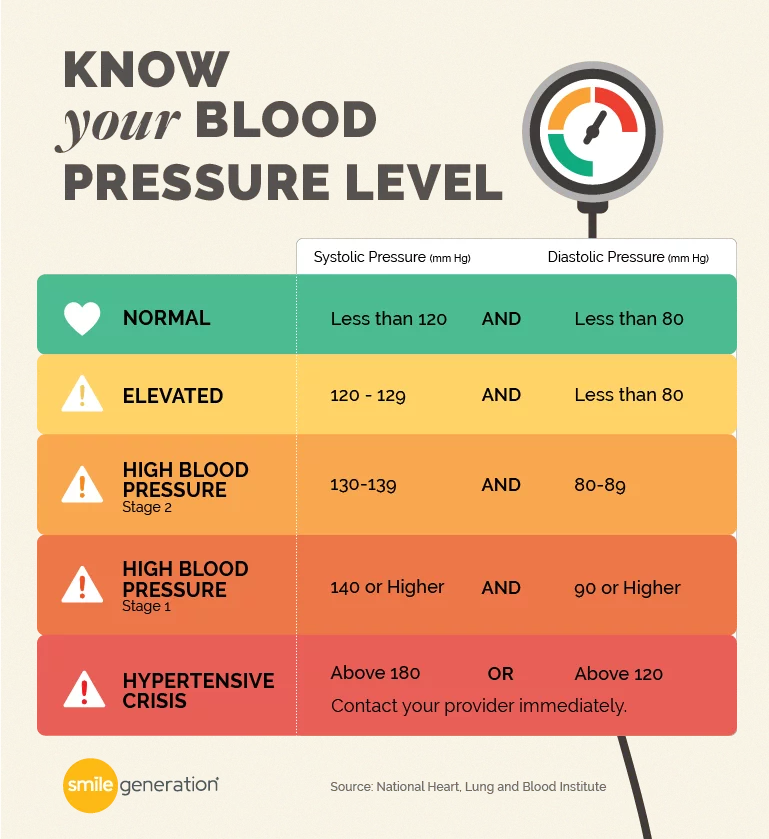
According to the AHA, uncontrolled hypertension can lead to serious health issues, including heart attack, stroke, heart failure, kidney disease, vision loss, and sexual dysfunction. It can also cause atherosclerosis, which is the buildup of plaque in the arteries.
Link Between Blood Pressure and Oral Health
Did you know your blood pressure and oral health are more connected than you might think? Research shows they affect each other in ways that go beyond the surface.
Gum disease can elevate your blood pressure.3 Inflammation and bacteria from infected gums don’t just stay in your mouth, they travel through your body, increasing blood pressure and putting your heart health at ris
On the flip side, hypertension has been linked to a greater risk of gum disease and even reduced saliva production, which can leave your mouth more vulnerable. While more research is still needed, the connection is clear: your mouth and heart affect one another. 4
Which brings us to that simple blood pressure measurement during your dental check-up. Two powerful numbers that can change your health and life.
That’s why a simple blood pressure check during your dental visit can reveal so much. Two small numbers could make a life-changing difference for your health. Take care of your smile – it’s connected to your whole body, especially your heart.
Find your trusted, local dentist today!
Sources
[1] “What Is High Blood Pressure?” National Heart, Lung and Blood Institute, Health Topics. https://www.nhlbi.nih.gov/health/high-blood-pressure
[2] “How High Blood Pressure Can Lead to Stroke.” American Heart Association,
https://www.heart.org/en/health-topics/high-blood-pressure/health-threats-from-high-blood-pressure/how-high-blood-pressure-can-lead-to-stroke
[3] “Periodontitis, Blood Pressure, and the Risk and Control of Arterial Hypertension: Epidemiological, Clinical, and Pathophysiological Aspects—Review of the Literature and Clinical Trials,” Current Hypertension Reports, May 7, 2021. https://pmc.ncbi.nlm.nih.gov/articles/PMC8105217/
[4] “Oral Manifestations In Hypertensive Patients: A Clinical Study,” Journal of Oral and Maxillofacial Pathology, May-Aug. 2021. https://pmc.ncbi.nlm.nih.gov/articles/PMC3424937/
Smile Generation blog articles are reviewed by a licensed medical professional prior to publishing. The information provided is for educational purposes only and is intended to support readers’ understanding of health and wellness. This content is not meant to replace professional medical advice, diagnosis, or treatment provided by a healthcare professional. We always recommend seeking the advice of a qualified healthcare provider with any questions regarding a medical condition or treatment.